Revival of the treacherous Black Sea route : Old route, new dangers: Migrant smugglers revive Black Sea route to Europe
Advertised as a "tourist yacht" to Europe, spacious and loaded with
food and water, it was in fact a stripped-down, rusty blue fishing boat
lacking any supplies for two stormy days at sea. Almost 160 men, women,
and children were crammed on board, sick and fearful as the boat rocked
violently from side to side, its leaky hold taking on water.
For Iraqi asylum-seeker Ahmed* and his family, transported to the
vessel in the middle of the night and initially kept in the dark about
their true destination – Romania – the experience was terrifying. “When I
saw [the boat], I said, ‘Oh my god!’” recalled the former army sniper
from Kirkuk, explaining that he refused to board until a smuggler with a
handgun threatened to kill his family.
Over the last few months, reports of migrant boats being intercepted in the Black Sea have proliferated, along with tales of the tragedies that occur when the vessels capsize in its rough waters. This route from Turkey to Romania is not entirely new – it was used in Soviet times to ply illicit goods – but it appears smugglers are now attempting to revive it.
Between mid-August and mid-September, five decommissioned fishing
boats carrying nearly 500 asylum-seekers landed in Romania, unsettling
an EU country that escaped the brunt of the so-called ”refugee crisis”
of 2015 and 2016. Until recently the route had fallen out of favour: Although 430 people came via the Black Sea in 2014, none arrived last year, and only 68 arrived in 2015, on a single boat.
Across on Turkey’s side of the Black Sea, some 834 refugees and migrants were caught and 10 smugglers detained in seven incidents between mid-August and early September, according to statistics published by the Turkish Anadolu news agency.
Following the EU-Turkey deal
in March 2016, informal migration to Europe dropped sharply as
high-tech security fences were erected along the Bulgarian-Turkish
border and increased naval patrols monitored the Aegean Sea. Crossings
between Turkey and Greece continue, but not in numbers comparable to the previous two years, which brought one million to Europe via the Greek islands.
Jodi Hilton/IRIN
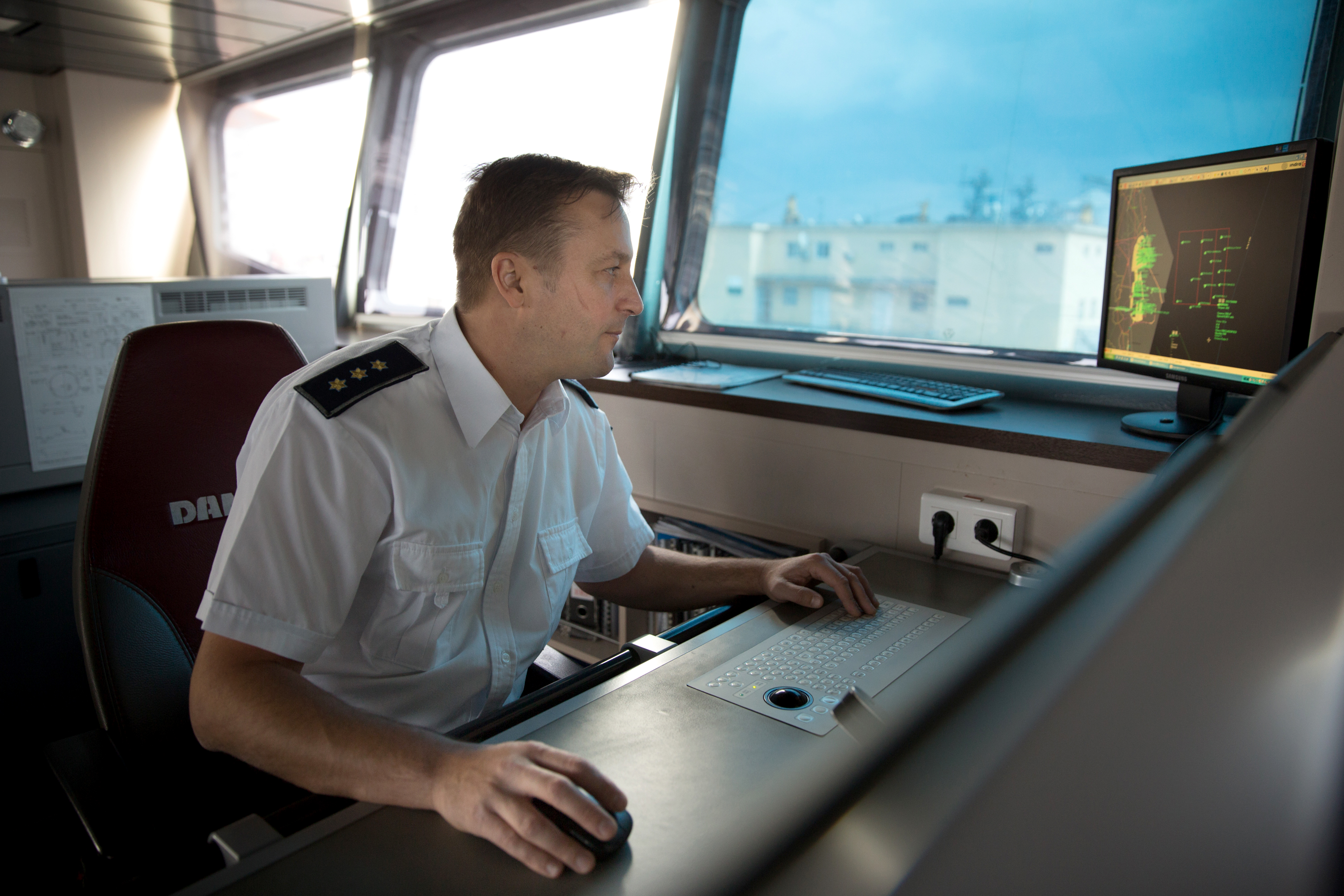
Coast Guard Captain Catalin Parashiv shows how the radar system works to
help detect suspicious boats, like those used to traffic asylum-seekers
from Turkey to Romania across the Black Sea.
“When you try to control existing routes, other routes start to
become operational,” explained Metin Çorabatir, president of the
Ankara-based Research Centre on Asylum and Migration.
According to Çorabatir, the rise in Black Sea smuggling is at least
partly due to the prolonged processing periods asylum-seekers undergo in
overcrowded Greek island reception centres, known as hotspots. He believes it is efforts to circumvent such obstacles that have led to increased arrivals in Romania.
“For some people, they say, ‘We are already dead’,” said Çorabatir.
“So even if there is high danger or risk of death in the sea or on the
land, some are determined to [cross] under whatever circumstances.”
Jodi Hilton/IRIN
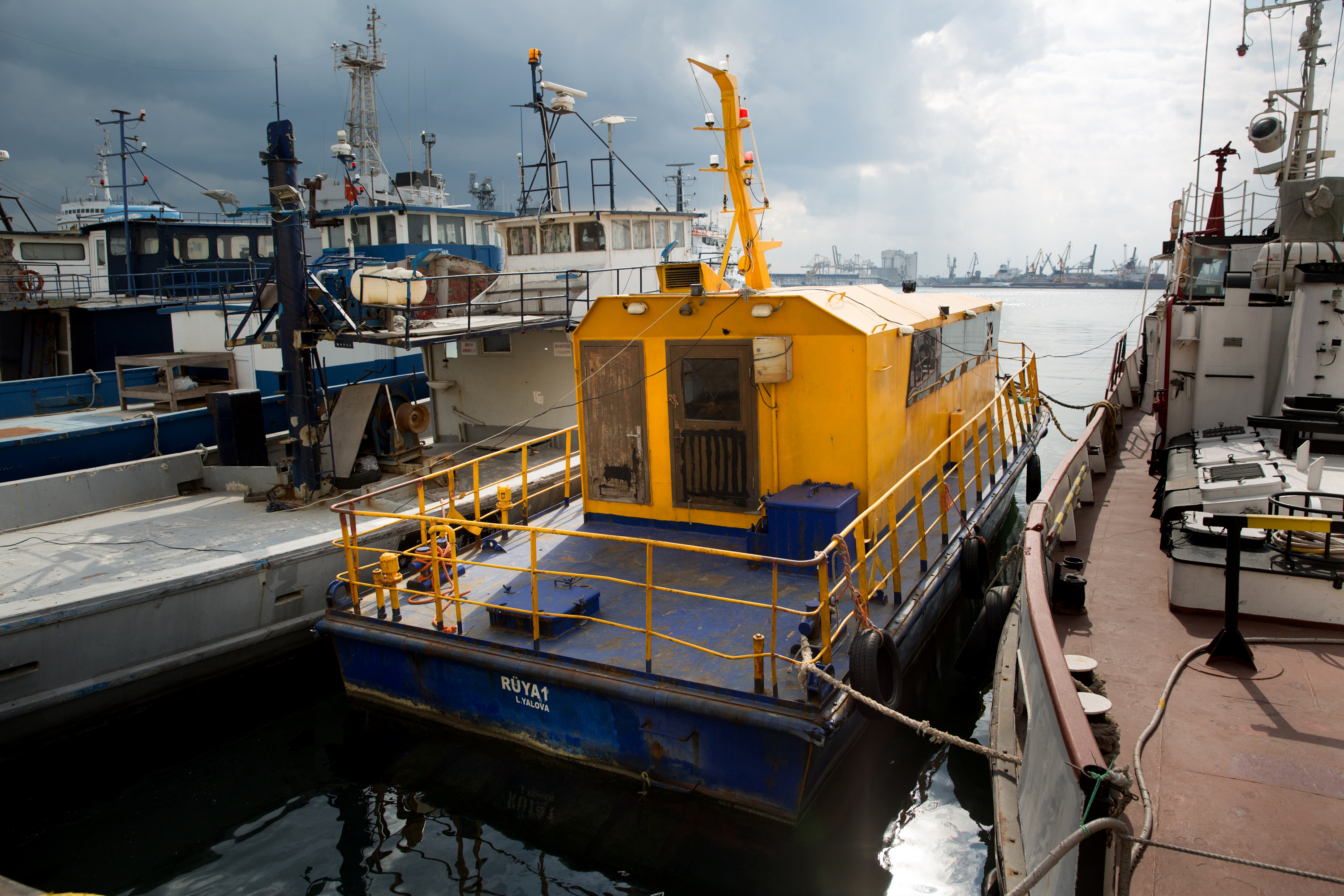
The old fishing boat that Ahmed and 156 other asylum-seekers used to
reach Romania is now docked at the Romanian port of Constanta.
A deadly sea
Ahmed’s voyage turned out to be more treacherous than even he
imagined. In a video provided by another Iraqi asylum-seeker on board,
some of the 157 men, women, and children can be seen taking turns to
venture out of the hold for air as the fishing boat is tossed about on
the high sea.
After more than two days in choppy waters, on 11 September, panicked migrants called 112, the international emergency number.
Romanian Coast Guard Captain Catalin Parashiv, whose crew works with
Frontex, the EU border control agency, said the waves were one to two
metres high when a military helicopter and later Coast Guard boats
reached the scene.
“The vessel was rolling hard, and hard rolling can also cause men [to fall] overboard and can sink the vessel,” Parashiv said.
A frenzy of confusion ensued. One man prepared to jump into the water
by donning an inflatable tube. The few who had life vests put them on.
Several asylum-seekers told IRIN that another man fell headfirst into
the sea and drowned during the rescue effort.
Revival of the treacherous Black Sea route
The Black Sea route is long and risky. The Aegean Sea crossing to the
Greek islands, by comparison, is just a few kilometres and can take
under two hours by rubber dinghy. The weather changes quickly on the
Black Sea, and crossings can often be deadly, Parashiv explained.
Inexperienced sailors can misjudge conditions, departing from Turkey in
calm seas without anticipating the forecast ahead.
On 22 September, a boat bound for Romania capsized
off Turkey's Black Sea coast, just north of the town of Kefken. The
Turkish coast guard rescued 40 people, mostly from Iraq, while 24 others
drowned. Another 14 remain missing and are presumed dead. The boat is
suspected to have departed from a site 115 kilometres to the east, in
Alapli, according to the nearby Caycuma municipality.
Emerging trend
Smuggling of firearms, gasoline, and cigarettes on the Black Sea was
commonplace in Soviet times. But the large-scale smuggling of
asylum-seekers to Europe is a relatively new phenomenon that has taken
residents of Turkey’s Black Sea coast by surprise.
Hassan*, a dock worker in Amasra, said he witnessed the Turkish coast guard haul a fishing boat packed with 334 people into the port on 29 August. He was stunned that a boat of such size could depart unnoticed.
“Everyone knows every boat in the port,” Hassan said. “If that boat
intended to take off from Amasra, we would have seen it. This is a hard
place to smuggle anything because of how small it is.”
After the 15-metre boat was tied up in his port, Hassan examined the
hull and noted it came from Çeşme, a Turkish resort town on the Aegean
that has been a magnet for refugees boarding rafts to Greece. The vessel
was modified to maximise space for passengers. It had been stripped of
all its fishing gear, which, in Hassan’s opinion, should have raised red
flags to authorities if it had passed through Istanbul's Bosphorus
Strait before migrants boarded it somewhere along the Black Sea coast.
“To get such a ship through the Bosphorus requires good connections,” he said.
The emerging trend of Black Sea migrant-smuggling has not gone
unnoticed by the Turkish authorities. Recently, the Turkish coast guard
has increased helicopter patrols along the shoreline. Turkish police
have also set up checkpoints on major roads in the region, stopping
buses to check passenger IDs in search of large groups of foreigners.
While reporting from the area, IRIN correspondents were stopped twice in
one day at such checkpoints.
Abby Dwommoh, a communications officer for the International
Organization for Migration in Turkey, told IRIN that so far there
haven’t been enough crossings to determine regular departure points and
who may be facilitating the smuggling boats.
“Smugglers, at this point, are looking for new ways and are testing
out new routes to reach Europe,” Dwommoh said. “I think it’s too early
to be drawing any major conclusions or saying that there’s any existing
patterns.”
Poor welcome
Those who survive the perilous Black Sea journey face another set of challenges in the Romanian asylum system.
In a local news agency interview last month Romanian Interior
Minister Carmen Dan said: “What I want people to understand very well is
this is a phenomenon that we can manage; we are neither hesitant nor
overwhelmed."
However, Cosmin Barzan, president of the Civic Resource Centre, a
Romanian NGO that provides refugee integration services, strongly
disagreed with that assessment and said government agencies have to call
NGOs to provide food and other emergency services. The Romanian
authorities, he said, are “totally overwhelmed whenever 20 people show
up. They don’t have a place to host them, or groceries to feed them.”
In the few government-run accommodation centres, migrants reported
poor conditions, including overcrowding and bedbug infestations.
Jodi Hilton/IRIN
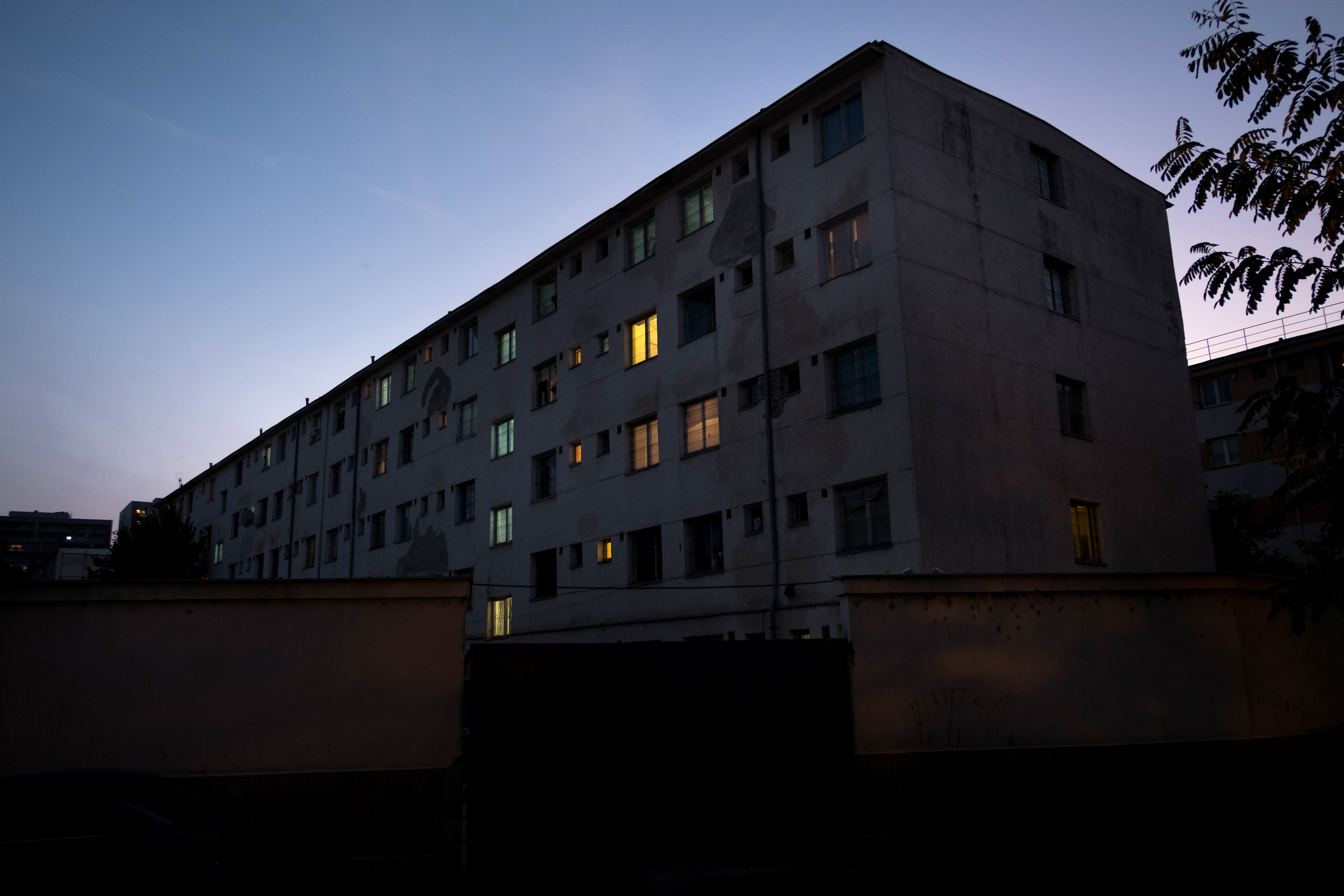
A dormitory that houses over 300 asylum-seekers in Bucharest, Romania.
As a matter of protocol, Romanian authorities detain people who enter
the country illegally for several days in order to determine their
identities, perform medical screenings, and single out potential
“facilitators" or smugglers.
Three men from Ahmed’s boat were arrested: nationals of Turkey, Iraq, and Iran.
Perwana, a 20-year-old asylum-seeker from Iran’s Kurdish region,
started crying when asked about her husband, Mohammed, who was being
held in the basement jail of the Constanta police station on charges of
human trafficking, operating an illegal vessel, and endangering human
life. Perwana said he was innocent and explained how the couple had
eloped in Turkey and paid $6,000 to board a vessel to Romania.
Deportation to Iran, she said, would be a death sentence.
Most asylum-seekers interviewed by IRIN didn’t want to remain in
Romania. Some from Ahmed’s and Perwana's group had been caught trying to
flee the country and were now in pre-deportation detention, along with
rejected asylum-seekers, who must leave the country within 15 days.
Though Romania is part of the EU, it is not part of the visa-free
Schengen zone, making it hard for asylum-seekers to continue their
journeys to prosperous member states such as France and Germany.
Once asylum is requested, a decision takes about three months. During
that time, asylum-seekers are assigned accommodation in one of four
open centres. The Immigration Inspectorate denied IRIN's request to
visit.
Fatah**, an Iraqi asylum-seeker staying in a Bucharest government
dormitory, shared photographs and videos of the room he inhabited with
his wife and three daughters. Each room contained bunk beds and an
adjacent bathroom with no shower. Dozens of people shared the few
kitchens.
Jodi Hilton/IRIN
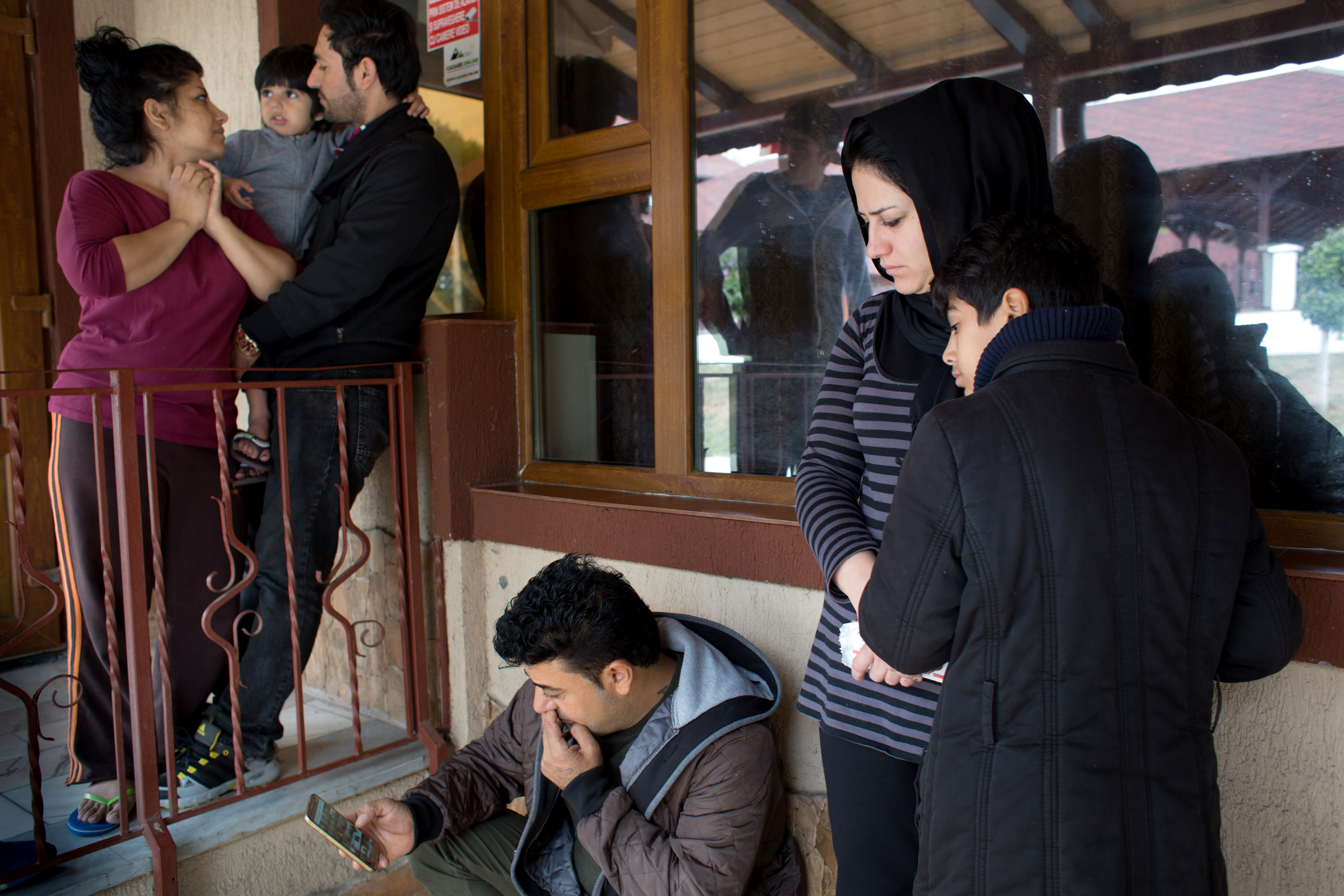
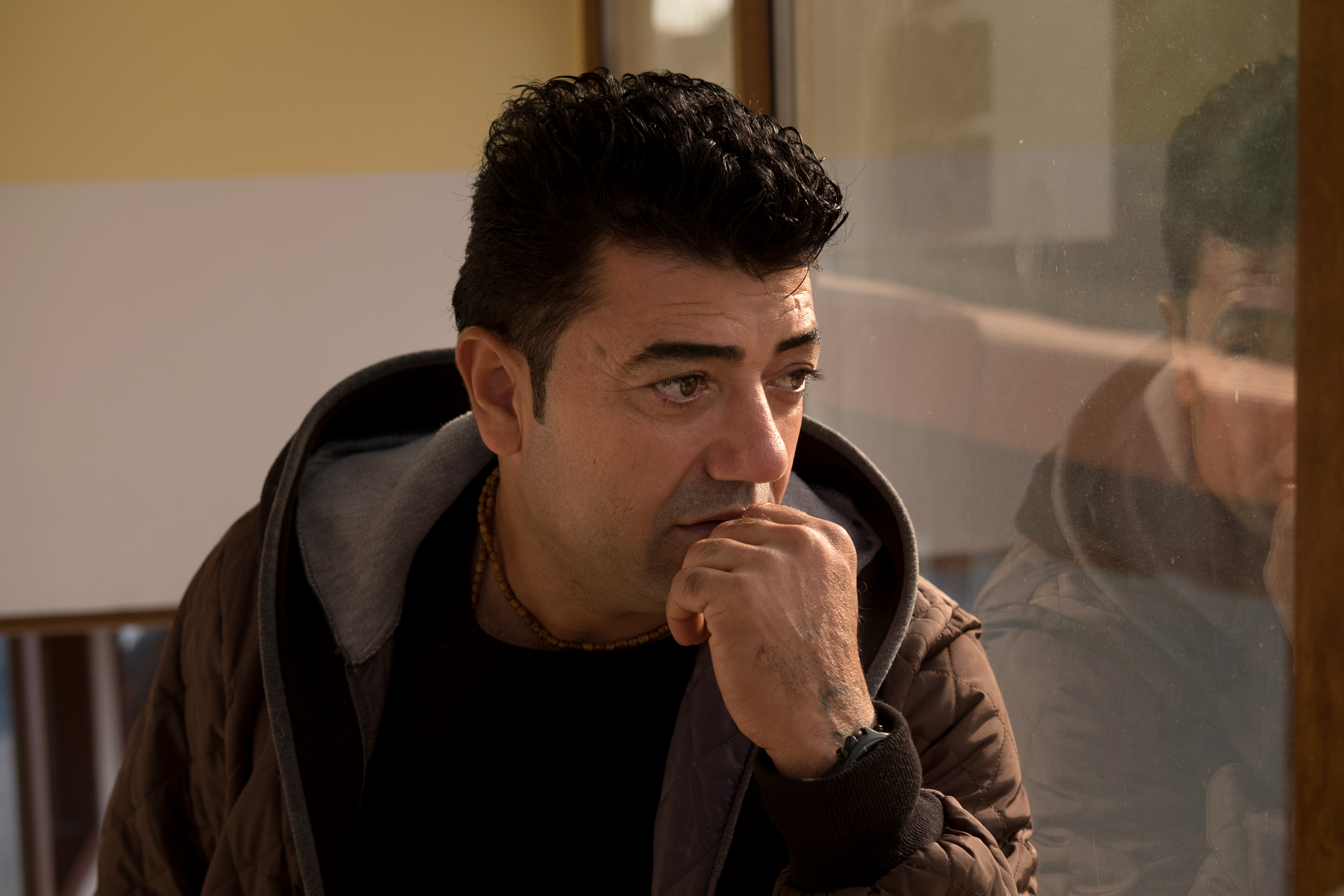
Ahmed travelled to Romania with 11 family members. They fled Iraq after
he was threatened and shot due to his collaboration with the U.S.
military.
Fatah said he fled his country when Shia militias in his native
Diyala bombed his family's transportation company. “The people [are]
nice in Romania, but Romania is a poor country. That’s the problem,” he
explained. The family had applied for asylum in Romania, but Fatah was
searching for a way to get them to Britain.
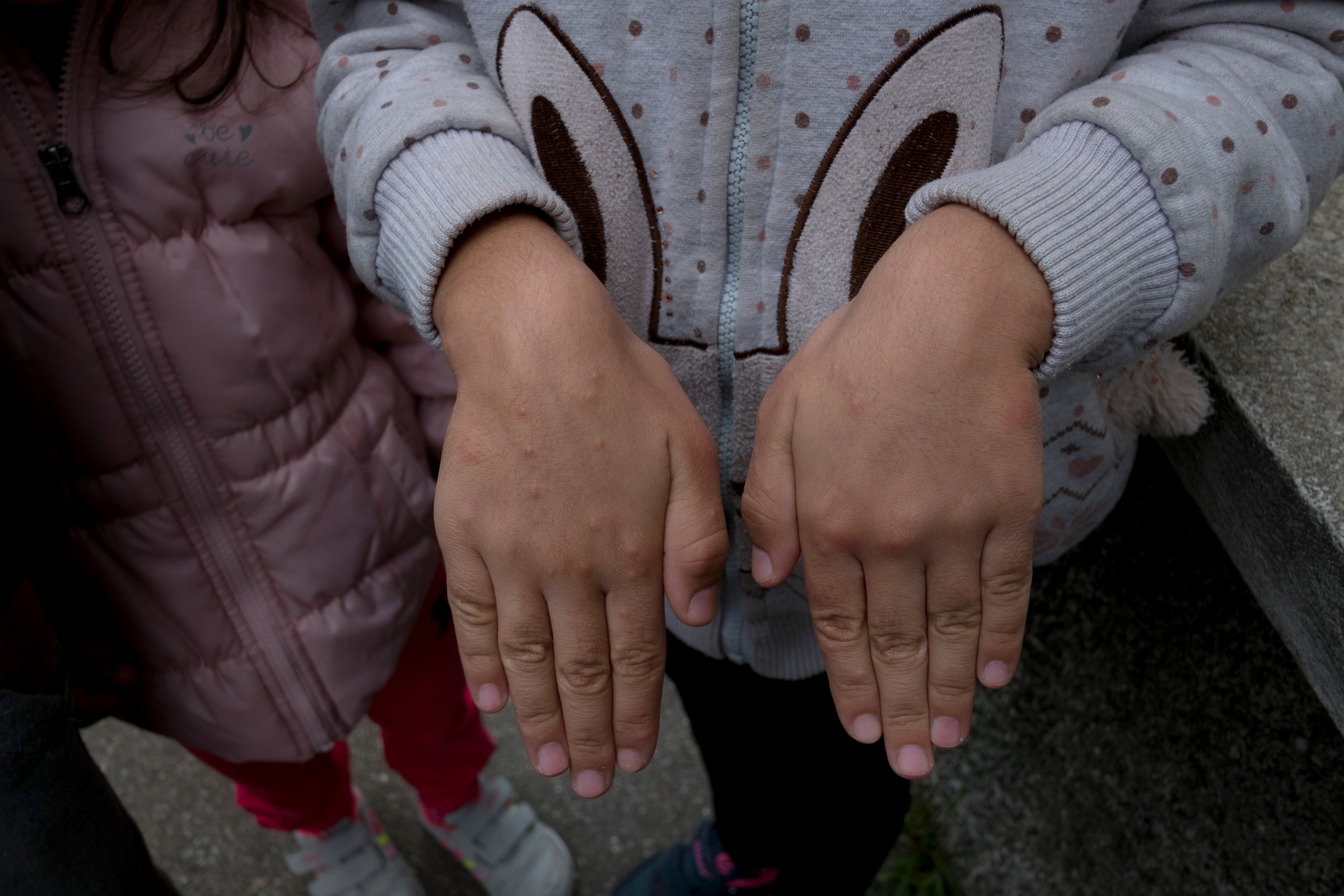
His daughters, aged six, nine, and 11, showed their hands. They were dotted with raised bumps where bedbugs had bitten them.
Jodi Hilton/IRIN
One of Fatah's three daughters shows her hands, which are marked by bed-bug bites.
Uncertain future
The Romanian government’s accommodations for asylum seekers are
nearing their 900-person capacity, according to Gabriela Leu, a
spokeswoman for the UN’s refugee agency, UNHCR. In addition to the more
than 500 who arrived from Turkey this year, hundreds more have been
caught entering Romania from Serbia or Bulgaria.
At a government-run dormitory in Galati in eastern Romania where
families are crowded 10 to a room, Ahmed and his family live with others
who were sent to Romania through the EU relocation scheme or returned
to the country under the Dublin Regulation, which gives member states
the right to return asylum-seekers to their first country of arrival in
the EU. Among them are families and individuals from Iraq, Iran,
Afghanistan, and Syria.
Leu said refugee recognition rates range from approximately 99
percent for Syrian applicants to 74 percent for Iraqis, 35 percent for
Afghans, and 23 percent for other nationalities.
For the first six months, asylum-seekers in Romania are entitled to
receive 110-150 euros monthly per person to cover food, clothing, and
expenses. Once granted asylum, they are entitled to a small housing
allowance.
A few people who have been granted refugee status have managed to get jobs, and the children attend Romanian schools.
The Romanian Immigration Inspectorate said it deported 37 people in
September. It expected to deport another 100 back to Iraq and Iran.
Among them were voluntary deportees who, upon realising they were stuck
in Romania, opted to return home.
Ahmed's brother, along with his wife and child, were among those
detained in a pre-deportation centre. Ahmed was afraid they would be
sent back to Iraq.
With such a dangerous journey and such bleak prospects, buyer’s remorse was common among the asylum-seekers here.
“Many people are waiting to board to Romania,” Fatah said. “I told
them, 'It’s a very dangerous way. Don’t come to Romania by ship'.”
Jodi Hilton/IRIN
Ahmed's family was divided in Romania. He worries about his brother,
brother's wife and son, who were taken to pre-deportation detention and
may soon be deported back to Iraq.
Ahmed told IRIN he felt deceived. When he first arrived off the boat,
he didn’t know where he was: “They told us we were in Romania, and I
asked, Roma? ‘No,’ they said. ‘Romania’.”
Ahmed said he had to leave Iraq. It was due to his collaboration with
the Americans that he began receiving threats. Gunmen eventually came
to his house and shot him three times – he had a festering exit wound on
his back and three entrance wounds. Two bullets remain in his abdomen.
Ahmed said he paid smugglers nearly $30,000 to transport his
12-member family, including his three children, a sibling, and his
disabled mother, to France. Romania was never even on their radar. *All family names are not used in order to protect the subjects’ identities ** Not his real name


Comments
Post a Comment